
Life Sciences M&A Is Back in the Headlines, but Integration Is Where the Real Work Begins
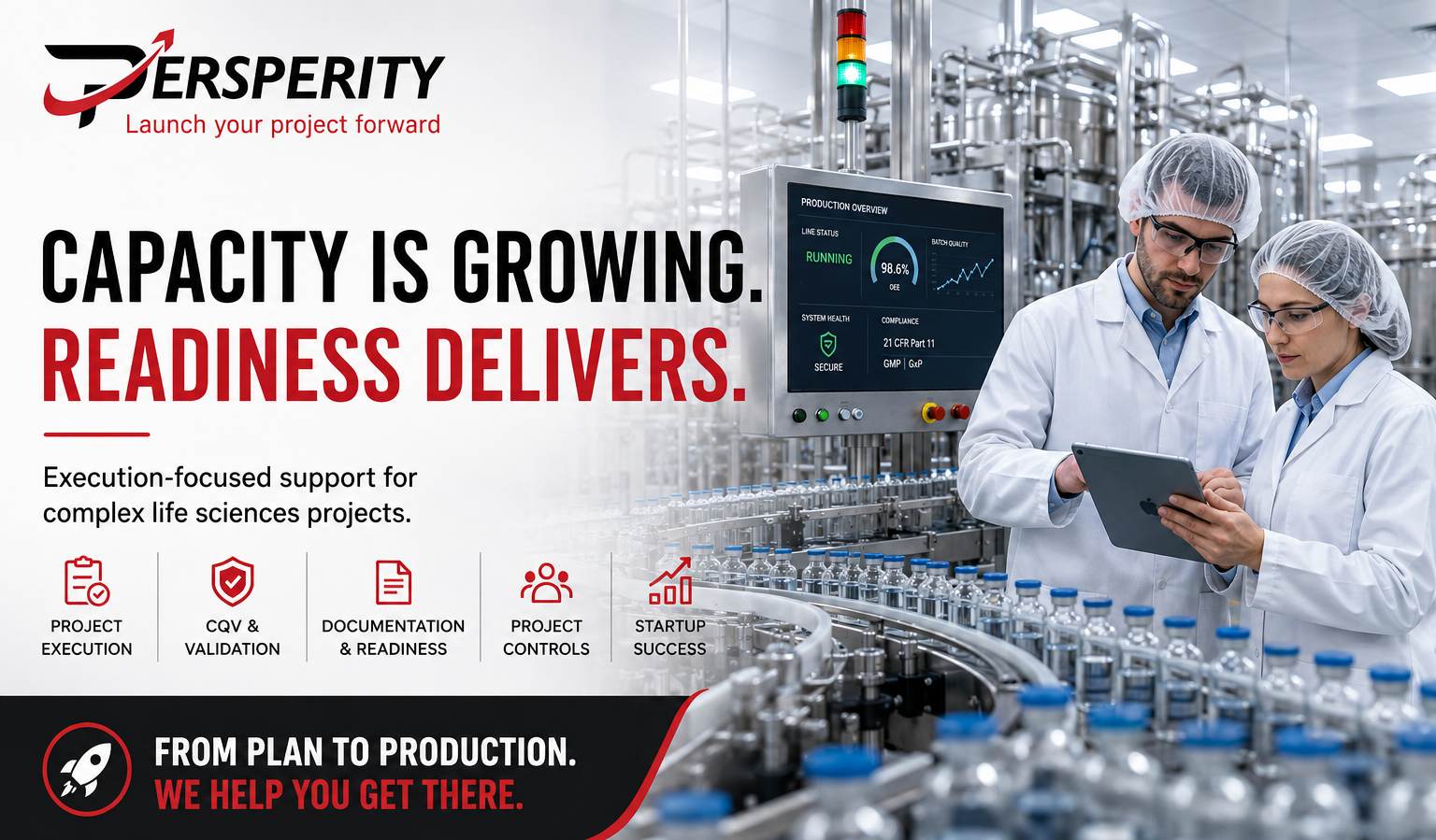
Life sciences manufacturing investment continues to move quickly.
Bristol Myers Squibb announced that it selected Generation Park in Houston for a new $2.3 billion advanced manufacturing campus. The site is expected to cover 600,000 square feet, create nearly 500 permanent skilled jobs, and support about 2,000 construction and indirect jobs during the build phase from 2027 to 2030. The company says the site will use flexible, advanced manufacturing technologies and support multiple product types, including small molecules, biologics, and antibody-drug conjugates.
At the same time, sterile manufacturing and CDMO partnerships are also gaining momentum. Gland Pharma recently entered into a strategic manufacturing and supply agreement with a global pharmaceutical company for technology transfer, manufacturing, and supply of sterile injectable products for global markets. The agreement is expected to generate $90 million to $100 million in annual revenue. Gland Pharma and Neuland Laboratories also announced a long-term CDMO partnership focused on sterile API production for complex injectable therapies.
These announcements are different, but they point to the same reality: life sciences companies are investing in more capacity, more flexible manufacturing models, and more specialized production networks.
That is good news for the industry.
But capacity only matters when it is ready to operate.
Capacity Expansion Is Not Just a Facilities Story
Large manufacturing investments often get described in terms of dollars, square footage, jobs, and product types. Those details matter, but they do not tell the full story.
A new facility is not productive just because it is built.
A CDMO agreement is not successful just because it is signed.
A sterile injectable line is not ready just because equipment is installed.
In regulated manufacturing, capacity becomes real only when facilities, utilities, process equipment, automation, documentation, quality systems, validation, trained operators, vendors, and startup support are aligned.
That is where many projects get difficult.
A facility can be physically complete while still carrying readiness gaps. Vendor documentation may be late. Turnover packages may be incomplete. Automation issues may remain open. Training may not match the actual startup sequence. Quality review timelines may not support the project schedule. System boundaries may not be clear enough for commissioning, qualification, verification, or validation.
Those are not small details.
They are the details that determine whether capacity becomes production.
Flexible Manufacturing Creates Flexible Complexity
The BMS Houston campus is being described as flexible and advanced, with the ability to support different types of medicines, including small molecules, biologics, and antibody-drug conjugates. That kind of flexibility is valuable because life sciences companies need manufacturing networks that can adapt as pipelines change.
But flexibility creates complexity.
Multi-product manufacturing environments need clear requirements, strong change control, reliable automation, documented cleaning and changeover expectations, defined process boundaries, trained teams, and quality systems that can support variation without losing control.
For biologics and antibody-drug conjugates, execution discipline becomes even more important because the processes, materials, containment requirements, and quality expectations can be highly specific. For sterile injectables, the margin for error is especially small because contamination control, aseptic operations, environmental monitoring, and documentation must work together from the beginning.
That means readiness cannot be treated as a final checklist.
It has to be built into the project.
CDMO Growth Raises the Bar for Vendor Readiness
The recent Gland Pharma announcements show how important CDMO partnerships are becoming for sterile injectables, sterile APIs, and complex therapies. One agreement focuses on end-to-end services for technology transfer, manufacturing, and supply of sterile injectable products. Another focuses on sterile API production for complex injectable therapies.
These partnerships can help companies scale faster, access specialized capabilities, and support global supply. But they also create execution risk if the practical work is not managed carefully.
CDMO success depends on more than capacity.
It depends on shared timelines, clear documentation, aligned quality expectations, tech transfer discipline, change control, vendor deliverables, test strategy, batch documentation, issue escalation, and readiness checkpoints.
The phrase “technology transfer” can sound straightforward. In practice, it requires disciplined coordination across process knowledge, analytical methods, materials, equipment, quality records, validation strategy, and operations.
If those details are not managed early, the project may not feel at risk until the schedule is already under pressure.
Project Controls Need to Show Readiness, Not Just Progress
As manufacturing investments grow, project controls become more important.
A project dashboard can show that construction is moving, procurement is active, and milestones are being tracked. But leaders also need to know whether the work is actually ready for the next phase.
Are vendor documents complete?
Are protocols approved?
Are automation issues closed?
Are quality reviews on track?
Are training records aligned with startup timing?
Are system boundaries clear?
Are turnover packages usable?
Are open risks being resolved or just carried forward?
In complex regulated environments, “green” status should mean more than activity is happening. It should mean the project is building toward operational readiness.
Strong project controls help teams see gaps early enough to act.
The Persperity Perspective
The recent manufacturing and CDMO news shows that life sciences companies are still investing in capacity, flexibility, and specialized production capability.
That momentum creates opportunity.
It also creates execution pressure.
At Persperity, we support complex projects in regulated manufacturing environments where the work has to move from plan to production. That includes CQV and C&V support, documentation, project controls, validation readiness, vendor coordination, startup readiness, quality alignment, and practical execution leadership.
Persperity is not built to simply advise from the outside.
We work alongside teams to help close the gaps that slow projects down.
Because in life sciences manufacturing, capacity is not the finish line.
Ready capacity is.